 English
 Español
 中文简体

Home / News / Industry News / How to Select the Right O-Ring Chain for Your Specific Industrial Application
As an experienced O-Ring Chain Factory, we’ve seen countless businesses struggle with chain failures simply because they picked the wrong type for their equipment. Many overseas buyers and engineers focus on price alone, ignoring critical factors like load capacity, environmental conditions, and equipment compatibility. This article breaks down practical, actionable tips to help you choose the right O-ring chain, avoiding costly downtime and replacement challenges.

Understand Your Equipment’s Load and Speed Requirements
The step in selecting an O-ring chain is to map out your equipment’s core operational needs. Start by calculating the load the chain will bear—this includes both static weight and dynamic stress during operation. For high-speed machinery, you’ll need a chain with precise pitch accuracy and durable O-ring seals to handle constant friction. Slow-speed, heavy-load applications, on the other hand, require thicker link plates and reinforced pins to prevent deformation. Skipping this step often leads to premature chain elongation or seal damage, even if the chain is of high quality. Our technical team always recommends sharing detailed equipment specifications upfront to ensure a suitable match.
Match O-Ring Material to Your Working Environment
O-ring seals are the heart of these chains, and their material must align with your operating conditions. For general indoor use, nitrile rubber O-rings work well, offering good wear resistance and affordability. If your equipment operates in wet, humid, or corrosive environments—such as marine machinery or food processing lines—opt for fluorocarbon rubber O-rings, which resist water, chemicals, and high temperatures. For cold conditions, silicone O-rings maintain flexibility and prevent cracking. Using the wrong material is a common mistake that leads to seal failure, grease leakage, and eventually chain breakdown. We can provide material compatibility guidance tailored to your specific work environment.
Prioritize Chain Pitch and Link Design for Compatibility
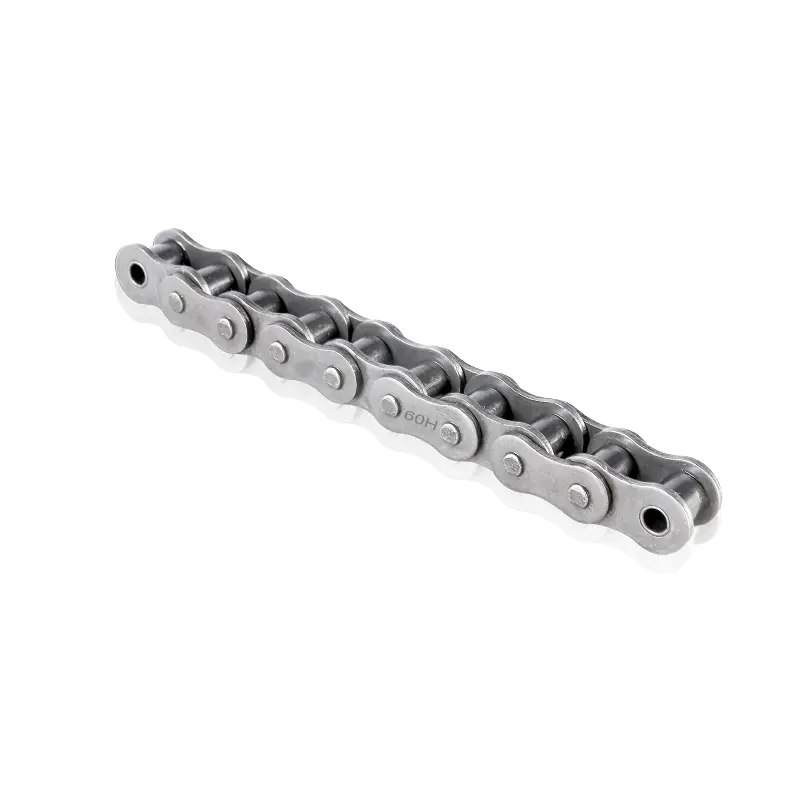
Chain pitch, which refers to the distance between consecutive pin centers, is a critical factor for compatibility with your sprockets. Mismatched pitch causes uneven wear, increased noise, and potential chain derailment. Additionally, consider the link design: standard links work for applications, but offset links may be needed for equipment with limited installation space. For heavy-duty use, look for chains with solid bushings and seamless O-ring integration, which improve durability and reduce maintenance requirements. Our manufacturing process includes strict pitch calibration, ensuring every chain fits properly with standard and custom sprockets.
Check for Quality Manufacturing and Certification
Not all O-ring chains are manufactured with the same quality standards, and reducing production quality can frequent replacements. When sourcing, look for chains that meet recognised industry standards, such as ISO or ANSI certifications, which support consistent performance and operational safety. Key quality indicators include smooth link surfaces, secure O-ring positioning, and uniform grease distribution.
As a professional O-Ring Chain Factory, we conduct quality inspections throughout the production process, including material selection, component processing, and final assembly. We also provide batch testing records for bulk orders, helping buyers verify product consistency and manufacturing reliability.
Evaluate After-Sales Support and Customization Options
Reliable technical support plays an important role in long-term chain performance. Choose a supplier that can provide installation guidance, replacement support, and solutions for operational issues. For specialised equipment requirements, customization options can help achieve better compatibility, including chain length adjustment, surface coating selection, or modified sealing structures.
We work closely with clients to support different project requirements, from small-batch testing to large-scale production orders. Our technical team provides assistance with installation, maintenance, and troubleshooting, helping customers extend chain service life and improve equipment reliability.
Balance Cost and Long-Term Value
While initial purchasing cost is an important factor, selecting chains only based on price may increase long-term operating expenses. Lower-quality chains often require more frequent replacement, creating additional downtime and maintenance costs. A properly selected O-ring chain provides stable performance, longer service intervals, and improved total cost control throughout its working cycle.
We support customers with competitive pricing for standard chain models and transparent solutions for customized requirements, helping buyers achieve a practical balance between investment and operational value.
Selecting the right O-ring chain requires careful consideration of equipment requirements, working environments, manufacturing quality, and supplier support. As a trusted O-Ring Chain Factory, we provide tailored chain solutions, technical guidance, and reliable products to help global buyers and engineers improve equipment performance, reduce maintenance risks, and achieve stable operation.