 English
 Español
 中文简体

Home / News / Industry News / What Today’s Buyers Are Asking About O-Ring Chain Factory Sourcing and Reliability
For procurement managers and engineering teams evaluating power transmission components, the search for a reliable O-Ring Chain Factory has moved far beyond simply comparing price per meter. The conversation on platforms like LinkedIn and industry forums has shifted toward technical resilience, supply chain transparency, and the tangible lifespan of components in harsh environments. As a manufacturer at the heart of this industry, we recognize that overseas buyers are not just looking for a product; they are looking for a partner who understands that an O-ring chain is a critical asset that determines downtime and operational efficiency. This article addresses the specific concerns driving the current market and outlines why a precision-driven O-Ring Chain Factory should be your strategic choice.

The Shift in Search Intent: From "Cheap" to "Lifecycle Cost"
Recent analytics and social listening tools indicate a distinct pivot in how engineers and buyers search for drive chain solutions. Terms like "O-ring chain tensile strength," "corrosion resistance for agricultural chains," and "seal durability in high-heat applications" are trending. This indicates a move away from commodity buying toward value engineering. Buyers want to know how the chain performs when the sprocket is covered in mud, or the equipment is running at peak temperature.
Material Matters: What the Data Shows About Seal Integrity
One of the frequent questions we receive revolves around the elastomer quality—specifically, how the O-rings behave under stress. General maintenance guides often overlook the specifics, but a factory that prioritizes material science knows that the seal’s resistance to solvents is paramount. For instance, using kerosene or gasoline on an O-ring chain is a common mistake that leads to premature failure because it attacks the rubber. We have refined our manufacturing to ensure that the compound used in our rings maintains its shape and sealing properties even when exposed to industry-standard maintenance practices. This focus on material compatibility significantly extends the interval between maintenance checks, a crucial factor for fleet operators.
Industrial Demands: When Standard Chains Fail
Agricultural and industrial environments are where O-ring chains prove their worth or reveal their weaknesses. We are seeing a surge in discussions regarding "aggressive environments," such as sugar mills or dusty installations, where standard roller chains suffer rapid corrosion and abrasive wear. In these settings, a factory must deliver a chain that acts as a barrier against contamination. The design of the O-ring—specifically the way it fits between the inner and outer plates—must prevent abrasive particles from entering the pin-bushing joint. This is not just about manufacturing; it is about solving the puzzle of wear in the field.
Maintenance Realities: Lubrication and Tensioning
While we design for durability, field maintenance remains a critical variable. There is a persistent myth that an O-ring chain requires no maintenance because the lubricant is "sealed in." However, the interface between the chain and sprocket still requires lubrication to prevent metal-on-metal wear. As a manufacturer, we are designing chains that are more tolerant of inconsistent maintenance schedules. We recommend high-mileage users consider automatic chain oilers, and we design our seals to be compatible with wax-based lubricants, which have less "fling". Furthermore, proper tensioning—ensuring the chain is not so loose that it "slaps" or so tight that it causes premature stretching—is essential for lifespan.
Process Control: The Difference Between a Supplier and a Manufacturer
When sourcing from an O-Ring Chain Factory, buyers are increasingly asking about "process control" and "traceability." This is where our authority as a manufacturer is apparent. It is not enough to produce a chain; one must control the metallurgy, the heat treatment, and the assembly precision.
To illustrate the depth of our manufacturing authority, consider our internal quality assurance system:
- Raw Material Certification: We enforce strict chemical composition standards for alloy steel, ensuring consistent hardness across every batch.
- Precision Riveting: We utilize automated riveting machines to ensure consistent pin tension, preventing "tight joints" that cause irregular wear.
- Ring Compression Testing: Each O-ring is tested for compression set resistance to guarantee it maintains a tight seal under pressure.
Batch Traceability: Every chain is logged with a batch code, allowing us to trace material and production history—a critical feature for buyers operating under strict ISO or NORSOK compliance requirements.
The Future of Factory Selection
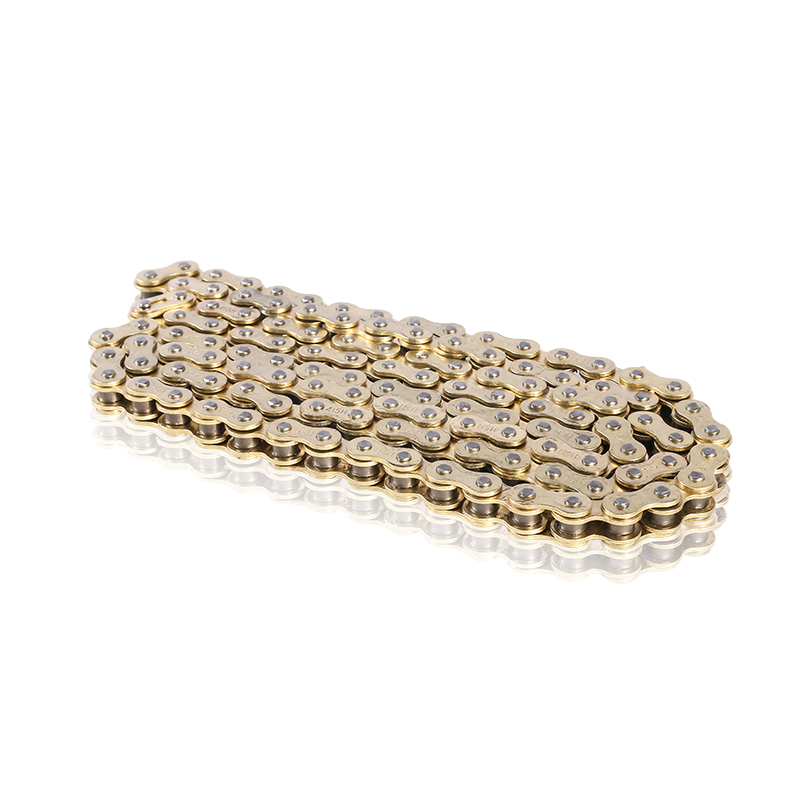
As the global market for O-ring motorcycle chains and industrial chains continues to evolve, the focus is firmly on sustainability and total cost of ownership. Selecting the right factory partner reduces the risk of catastrophic failure and maintenance costs. When you source from a specialized O-Ring Chain Factory, you are not just buying steel and rubber; you are investing in engineering that ensures your machinery runs longer, safer, and more efficiently. We invite you to look beyond the superficial specifications and consider the manufacturing story behind the product. For a more in-depth look at specific material certifications like NORSOK M-710 or to request samples, contact our engineering team to discuss your application requirements.